
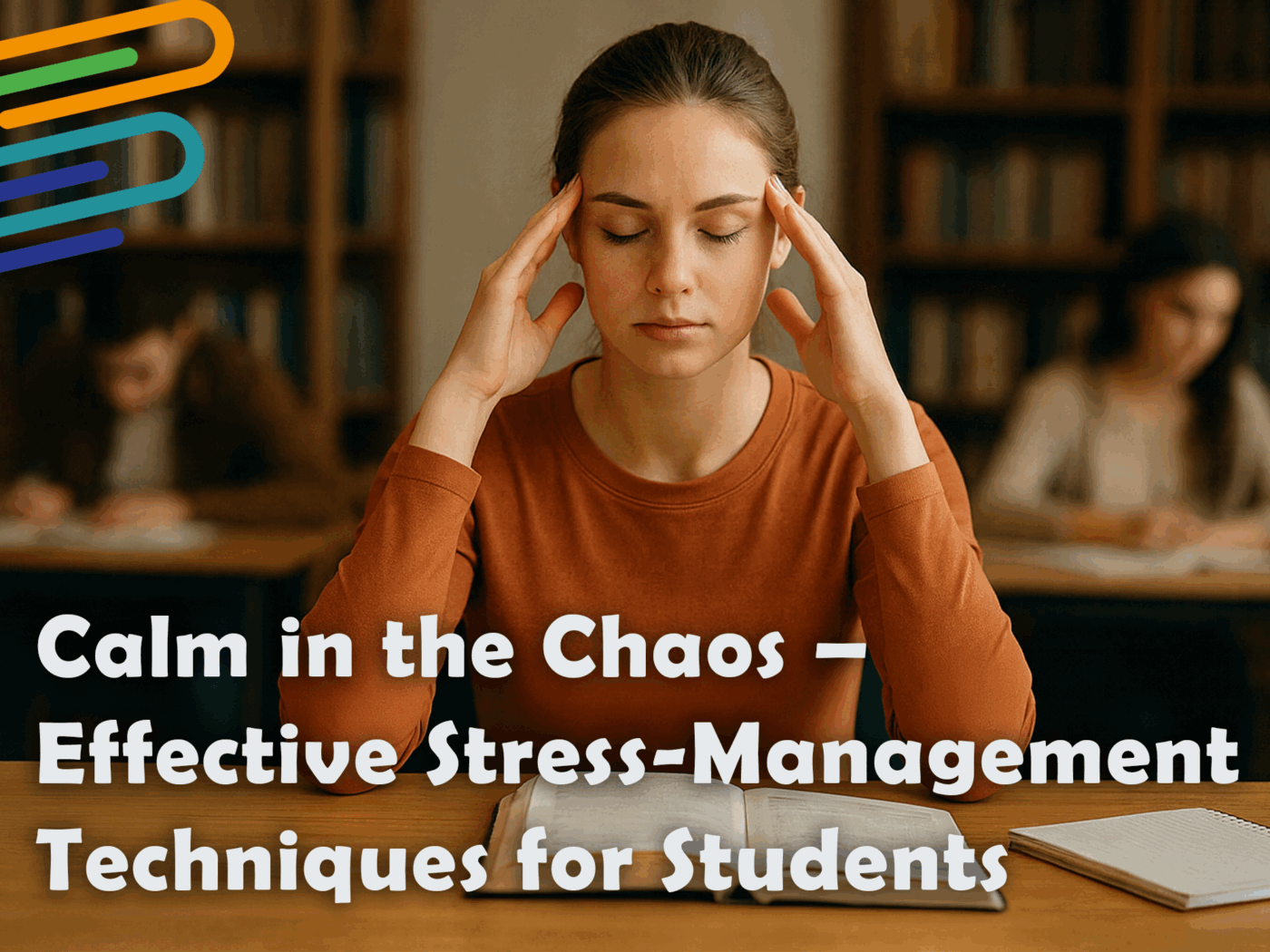
Exam periods always pose a serious mental challenge: the combination of deadlines, performance pressure, and lack of sleep can easily lead to stress. However, stress is not always our enemy – to a certain extent, it can even help enhance performance. This is called eustress, which motivates, gives energy, and boosts concentration. When the pressure exceeds our coping capacity, we speak of distress, which can cause tension, exhaustion, and anxiety. This is why it is essential to recognise it early so we can take action to maintain our mental balance.
Recognise the signs of stress
The signs of stress can vary greatly, and they affect everyone differently. Common physical symptoms include headaches, muscle tension, sleep disturbances, rapid heartbeat, or digestive issues. On a psychological level, irritability, difficulty concentrating, anxiety, loss of motivation, or mood swings may occur. These symptoms all indicate that the nervous system has entered an overstimulated state.
There are three main types of stress
- Acute stress: a short-term reaction to a specific situation, such as the excitement before an exam. In such cases, the body prepares for performance, attention increases, and the body switches into a “ready state.”
- Episodic acute stress: if this situation is repeated regularly (e.g., during every exam), the nervous system does not get enough time to recover.
- Chronic stress: long-term persistence, which can lead to physical and mental problems. Over time, it affects hormone regulation and memory, making studying and concentration even more difficult.
It is therefore worth stopping from time to time and observing what your body is signalling. If you often feel exhausted, have trouble resting, or find it increasingly difficult to concentrate while preparing for exams, you need conscious recovery.
However, it is essential not to try to stay awake artificially. Excessive consumption of coffee, energy drinks, cola, or caffeinated tea only increases tension, disrupts the sleep cycle, and hinders the body’s natural regeneration processes in the long term.
Breathing as a stress-reducing technique
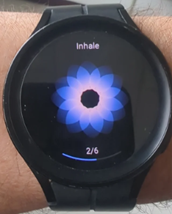 One of the simplest and most effective stress-reducing methods is the 4-4-4 breathing technique, which can be especially useful before exams, as breathing often becomes shallow and rushed during stress. The essence of the method is to inhale for 4 seconds, hold your breath for 4 seconds, and then exhale slowly over 4 seconds. This steady rhythm helps slow the heart rate, relieve physical tension, and restore the balance of the nervous system, enabling the body to relax and recover naturally.
Such breathing exercises are now available in many smartwatches and health apps. These use visuals, vibrations, or sound cues to indicate when to inhale, hold, or exhale the breath while also measuring time (which is especially helpful if you often lose your sense of timing).
The power of mindfulness
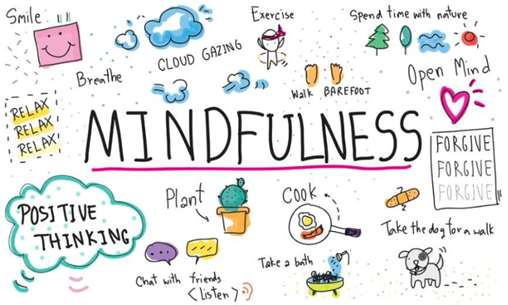
Mindfulness, or the practice of conscious presence, is also an effective stress-management method supported by numerous studies. Its essence is to observe your present thoughts, feelings, and bodily signals without judgment. Regular practice improves attention, reduces anxiety, and helps maintain mental balance.
Even a few minutes of short meditation in the library’s quiet spaces can help you refocus.
Balance through movement
Physical activity maintains not only the body but also the mind. Regular movement – whether it is a short walk between two chapters or a light yoga exercise – has been proven to reduce stress hormones, increase endorphin production, and improve mood and sleep quality.
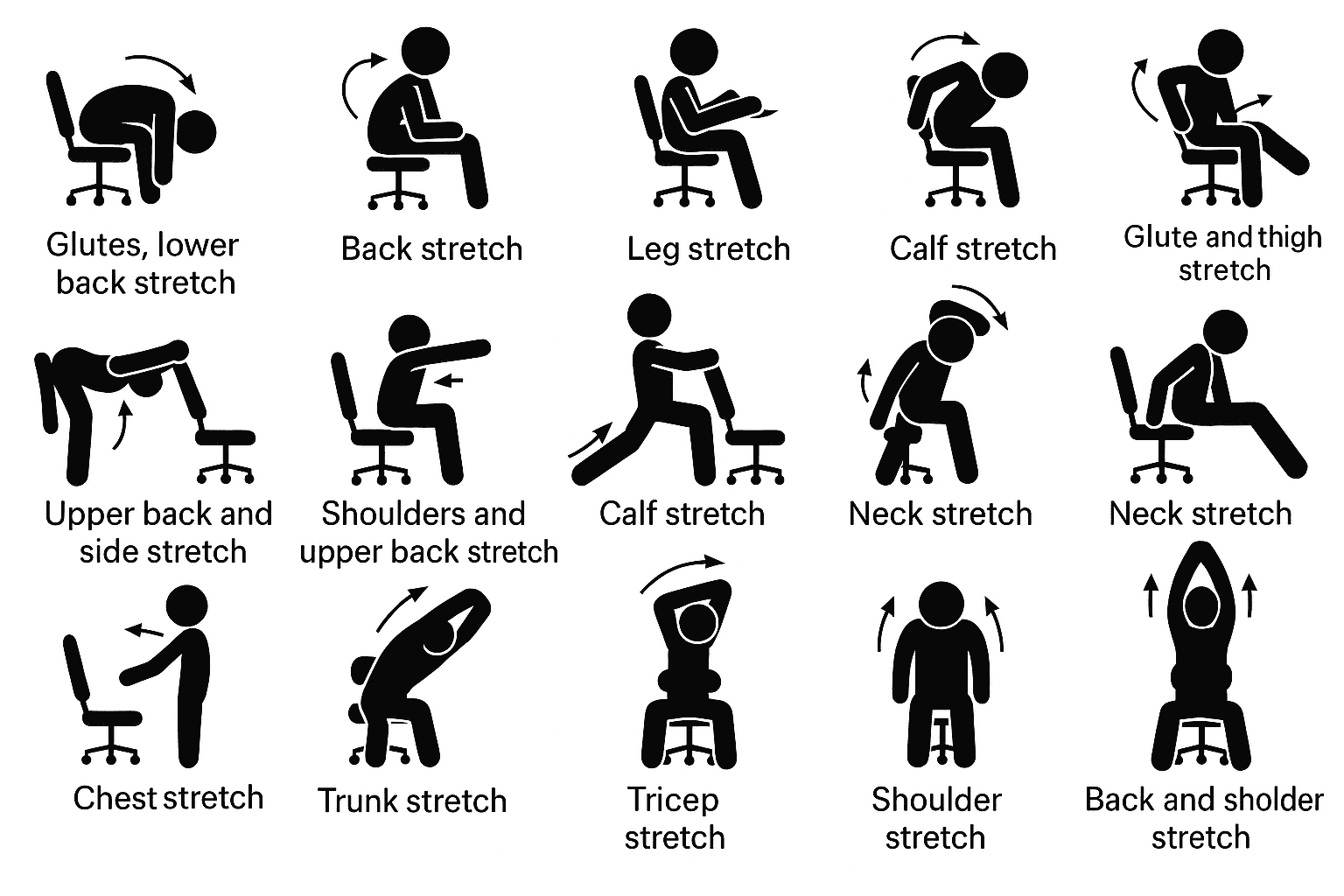
You don’t need to spend hours in the gym: even 20–30 minutes of daily exercise can significantly affect your well-being and concentration. It may be helpful to set timers to remind you of short breaks when you stand up, stretch, or clear your mind.
A few quick movement tips:
Rest consciously!
Recovery during studying is just as important as preparation itself. During short breaks, you can even listen to music, as research has shown it reduces stress levels and positively influences mood. We have created a Spotify playlist with chill beats and focus-enhancing tracks — give it a listen, it will feel good!

It is essential to use break time for actual recharge, not endless scrolling or watching series, as these only overload the nervous system and prevent the brain from truly switching off. It is much more beneficial to read a few pages from your favourite book or eat something nourishing.
 Regular meals rich in vitamins and protein (such as fresh vegetables, fish, eggs, and whole grains) support brain function and maintain energy levels. Fast food such as pizza or hamburgers may give a momentary boost, but they increase fatigue and stress in the long run.
During exam periods, pay attention not only to studying but also to nourishing your body, as a balanced system is much more resilient to strain.
If you really want to slow down, you can also try aromatherapy. Certain essential oils, such as lavender and citrus, have been scientifically proven to reduce tension and enhance concentration.

Ask for help if you need it!
If you feel that stress is constantly present in your life, do not hesitate to ask for help. The mental-health counselling services available at the university provide a safe space to share your feelings and find solutions together.
➡Mental health and life-management counselling for students – PTE Career Office
➡PTE Student Counselling Centre
Stress management does not mean eliminating stress, but learning how to handle and transform it. Let stress work for you, not against you!
Sources:
- Chamine, I., & Oken, B. S. (2016): Aroma Effects on Physiologic and Cognitive Function Following Acute Stress: A Mechanism Investigation. Journal of Alternative and Complementary Medicine, 22(9), 713–721. https://doi.org/10.1089/acm.2015.0349
- Esch, T., & Stefano, G. B. (2010): The neurobiology of stress management. Neuro Endocrinology Letters, 31(1), 19–39. PMID: 20150886
- Irving, J. A., Dobkin, P. L., & Park, J. (2009): Cultivating mindfulness in health care professionals: A review of empirical studies of mindfulness-based stress reduction (MBSR). Complementary Therapies in Clinical Practice, 15(2), 61–66. https://doi.org/10.1016/j.ctcp.2009.01.002
- Jerath, R., Crawford, M. W., Barnes, V. A., & Harden, K. (2015): Self-regulation of breathing as a primary treatment for anxiety. Applied Psychophysiology and Biofeedback, 40(2), 107–115. https://doi.org/10.1007/s10484-015-9279-8
- Kandola, A., Vancampfort, D., Herring, M., Rebar, A., & Hallgren, M. et al. (2018): Moving to Beat Anxiety: Epidemiology and Therapeutic Issues with Physical Activity for Anxiety. Current Psychiatry Reports, 20(8), 63. https://doi.org/10.1007/s11920-018-0923-x
- Linnemann, A., Ditzen, B., Strahler, J., Doerr, J. M., & Nater, U. M. (2015): Music listening as a means of stress reduction in daily life. Psychoneuroendocrinology, 60, 82–90. https://doi.org/10.1016/j.psyneuen.2015.06.008
- Piefke, M., & Glienke, K. (2017): The Effects of Stress on Prospective Memory: A Systematic Review. Psychology & Neuroscience, 10(3), 345–362. http://dx.doi.org/10.1037/pne0000102
- Vierra, J., Boonla, O., & Prasertsri, P. (2022): Effects of sleep deprivation and 4-7-8 breathing control on heart rate variability, blood pressure, blood glucose, and endothelial function in healthy young adults. Physiological Reports, 10(13), e15389. https://doi.org/10.14814/phy2.15389
Leave a Reply